Everything About Citrus Berry Jelly Nails Seasonal Add‑On
Step-by-step service plan for a fruit‑inspired summer add‑on using the Crystal Jelly Collection of sheer jellies.
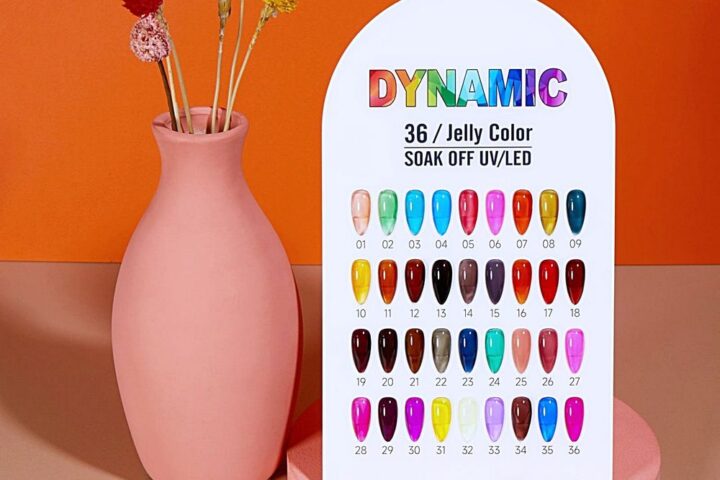
Summer brings requests for playful, photo‑ready manicures, and the Crystal Jelly Collection is built for that wet‑glass energy. In this add‑on and upsell guide we outline how to offer a fruit‑inspired service that uses translucent jelly colors to create citrus slices, berry accents and stained‑glass effect nails clients ask for when the weather turns warm.
Service Concept
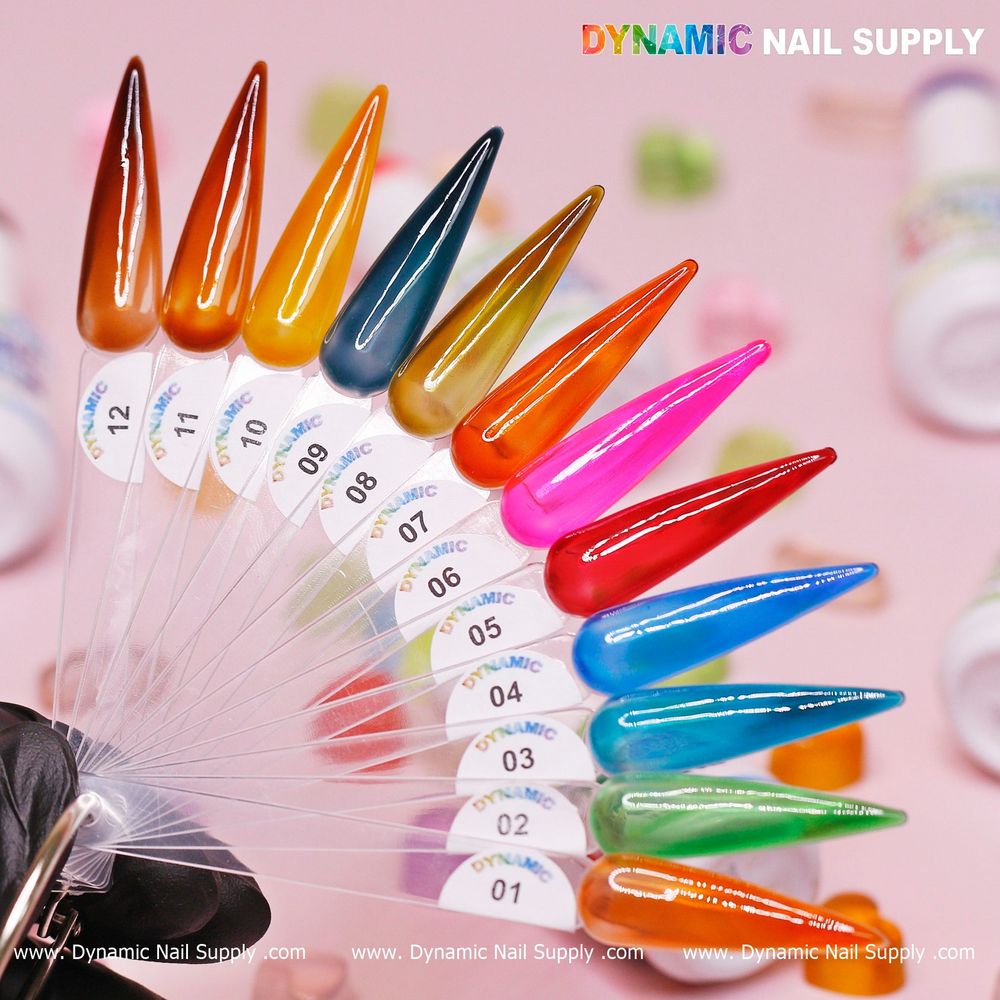
Glossy translucent jelly shades in warm and cool tones
We present a short seasonal add‑on: one full‑set or accent nails with layered translucent color to simulate fruit and stained‑glass panes. The Crystal Jelly Collection (36 sheer colors) reads glossy and see‑through on the nail, making it ideal for citrus and berry motifs where translucency is a design feature rather than a coverage requirement. This is a low‑complexity upsell suited to clients who want something playful but still salon‑durable.
Prep And Tools
- Standard prep: sanitize, shape, push cuticles, buff lightly for adhesion.
- Base layer: cured clear base coat on prepped nails; apply the jelly layers thin to preserve translucency.
- Tools: fine liner brush, dotting tool, detail brush, thin sponge or brush for layered ombré, and a clean mixing palette for tint control.
- Curing notes: cure 60 seconds in LED or 60–120 seconds in UV per product directions to lock each thin film.
Color Roles
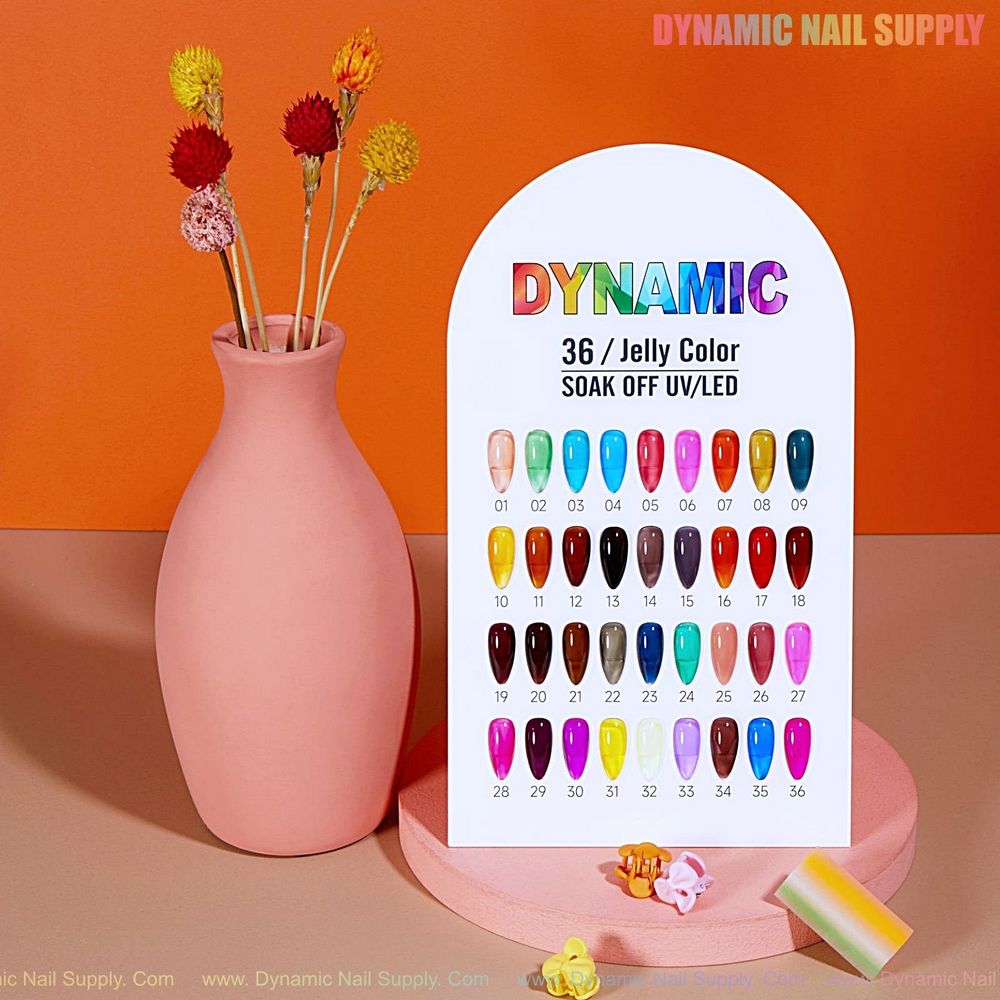
Stained‑glass effect options: sky blue to seafoam
Assign clear roles so each nail reads like fruit or glass rather than a muddled mix. Use mustard amber and coral orange for citrus bodies; deep ruby red for berry accents; bright sky blue and seafoam tones for stained‑glass backgrounds and contrast. Plan where negative space will appear: sheer jelly french tips and translucent slices benefit when left partially unfilled.
Layering Workflow
- Thin base: apply a cured base coat then one extremely thin coat of a light jelly to even the field; cure.
- Build depth: lay 1–3 thin jelly coats where needed to achieve depth without losing translucency; cure between coats.
- Fruit details: paint citrus segments using a fine liner and mustard amber plus coral orange; leave gaps of natural nail or a sheer wash for negative space.
- Berry accents: dot deep ruby red and feather edges with a tiny amount of clear jelly to create soft, translucent cores.
- Stained‑glass nails: layer bright sky blue and seafoam teal in irregular geometric shapes, separating with a thin glossy outline for leaded‑glass effect.
- Finish: seal with a high‑gloss top coat. For best adhesion and wear, follow the full cure sequence recommended.
For layered translucency and the wet‑glass fruit effect we recommend using the Crystal Jelly Collection in your station during summer bookings: Crystal Jelly Collection
Upsell Structure
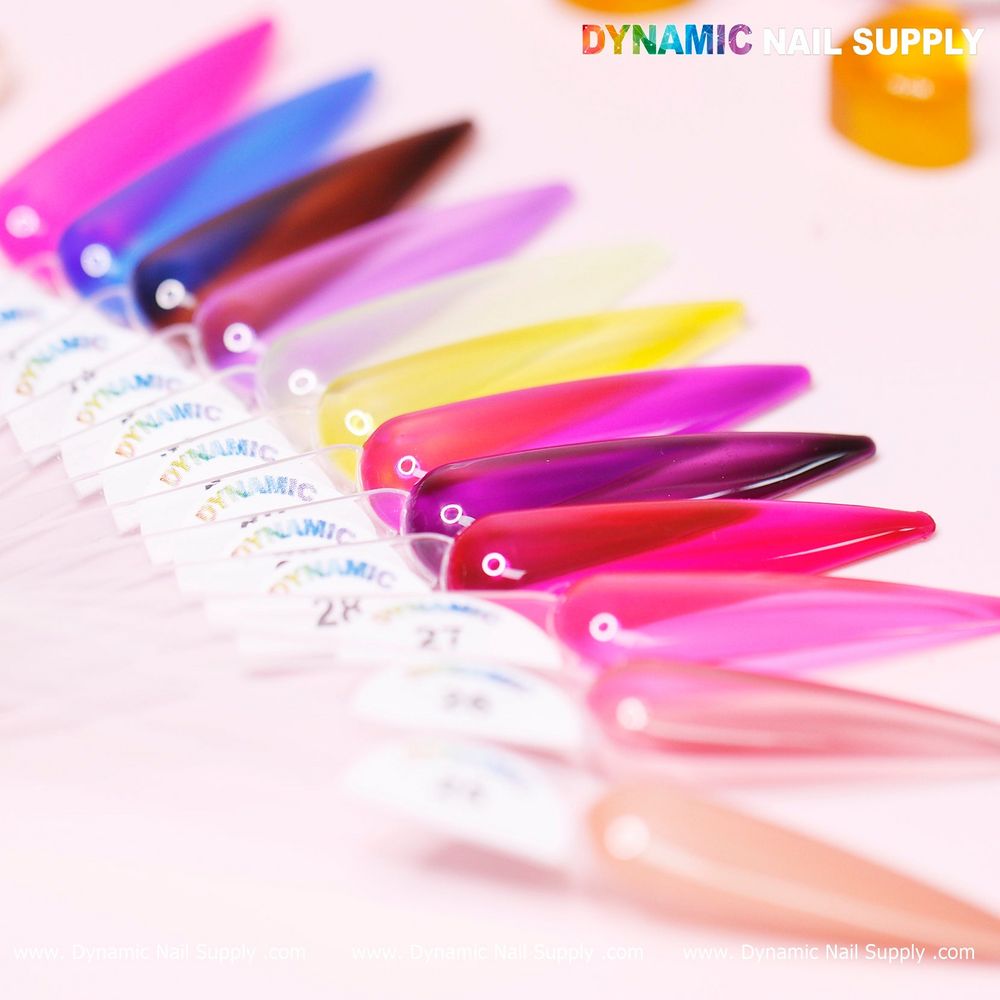
Citrus and berry inspired jelly colors on swatches
We price this as an add‑on accent service: one or two stained‑glass accents plus citrus/berry detail on remaining nails. Offer option tiers—accent nails only, half‑set, or full set—with clear time estimates for each. Individual bottles list at $6, prices may change; use that cost reference when calculating material spend.
Spotlight: Jelly gel 01
Jelly gel 01 is a translucent amber orange that reads like a sun‑lit slice of citrus on the nail. Use it as the primary color for citrus segments, warm gradients and stained‑glass panes that need golden warmth. Its translucency allows natural nail to show through for convincing fruit cross‑sections and thin, luminous tips.
Common Client Questions
- How long it lasts: when properly layered with a cured base and top coat and cured as directed, the set achieves salon wear appropriate for a seasonal add‑on.
- Finish expectations: these are glossy, glass‑like jellies without visible glitter or flakes—clients should know the wet‑look is the point.
- Service time: allow extra minutes for detail work and multiple thin coats; plan your schedule accordingly.
Safety And Handling
Work in a well‑ventilated space, avoid skin contact with uncured gel, and follow manufacturer cure times. Keep bottles capped and store upright; dispose of wipes with solvent residue safely.
Mini FAQ
Q1: Can we mix jellies to make new tones? A1: Yes, thin mixes create layered translucency but test mixes off‑chair first. Q2: Do we need a special top coat? A2: Use a high‑gloss gel top coat compatible with the jelly system. Q3: How many coats create the stained‑glass look? A3: Typically 2–3 thin layers per color, cured between coats for depth.